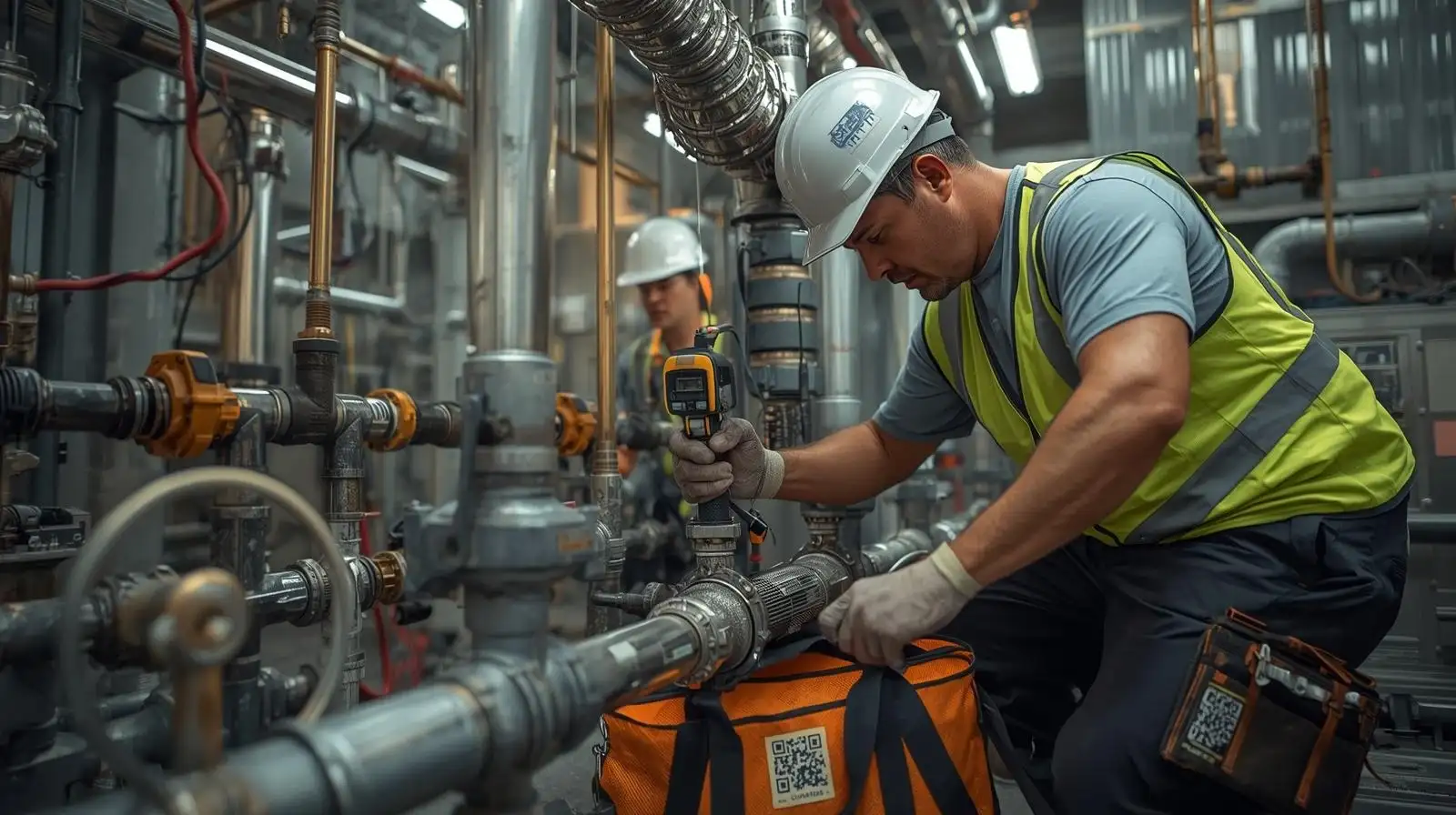
Why Plumbers Lose Equipment (And Why It Keeps Happening)
Plumbing equipment loss is a structural problem, not a personnel one. When tools move between vans, job sites and subcontractors without any record of who has what, losses are not a matter of if but a matter of when and how much. A drain camera left on a commercial site on Friday afternoon may not be noticed missing until Monday when the next crew needs it.
The absence of a check-out system is the root cause. Without a record linking a tool to a person or van, there is no mechanism for detecting a loss until a replacement is needed. At that point, the search-versus-replace calculation is quick: ordering a new tool is faster than calling five techs and checking three job sites. The $1,200 replacement gets raised and the original item is written off informally.
The cost compounds over a year in ways that are rarely measured directly. Plumbing businesses typically absorb tool replacement as a supply expense rather than an accountability failure. When the annual spend is examined, the pattern is consistent: a significant proportion of replacements are for items that were not lost; they were simply untracked and unretrievable. A registered asset register with QR check-out converts untracked losses into recoverable misplacements.
The Equipment Categories Plumbers Must Track
Not every item in a plumbing van carries the same risk of loss or the same consequence when it goes missing. The categories below are ordered by the combination of replacement cost, compliance obligation and operational impact when unavailable.
Pipe Inspection and Diagnostic Equipment
Drain cameras, CCTV inspection rigs and pipe locators are among the highest-value items a plumbing business owns. A quality CCTV inspection rig can cost $5,000 to $20,000 and is typically shared across multiple crews rather than assigned to a single van. When the location of a shared camera is unknown, the job waiting for it is delayed, the technician is idle and the client call arrives before the equipment does.
Registering inspection equipment with a QR label and tracking it through check-out eliminates scheduling conflicts. Before a job is dispatched, the coordinator can see which camera is available, where it currently is and when it is due back. Booking shared equipment through the system replaces the informal van-to-van handoff that makes location tracking impossible.
Pressure Testing and Commissioning Equipment
Hydrostatic test pumps, pressure gauges, gas pressure testers and commissioning sets carry both high replacement value and calibration obligations. Gas pressure test equipment used on regulated gas installations must be within calibration to produce a valid test result. An out-of-calibration gauge used on a gas commissioning job is not just a compliance failure; it can void the installation sign-off entirely.
Calibration alert schedules configured per instrument ensure that due dates are surfaced before expiry rather than discovered when a technician arrives on site with a non-compliant gauge. The calibration record, certificate and due date are attached to the asset record and available for inspection on demand.
Power Tools and Cordless Equipment
Pipe saws, reciprocating saws, angle grinders, rotary hammers, drills and impact drivers are the highest-volume loss category in plumbing van inventories. Individual tools are lower in value than inspection equipment, but the volume of losses across a fleet makes the annual replacement cost significant. Tools left on job sites are the most common scenario: a technician packs up quickly at end of day and a $400 cordless drill stays behind.
A QR label on each tool and a daily van scan resolves most of this loss. When a technician scans tools back into the van at end of day, any item not scanned is immediately flagged as potentially left behind while the job site is still accessible. Audit scans run at the start of each week confirm van inventory against the registered list and surface any items that need to be located before they are forgotten.
Specialised Plumbing Plant
Pipe bending machines, hydraulic pipe pressers, press-fit tooling sets and grouting equipment are typically used across multiple crews on a rotational basis. This category suffers the same problem as inspection cameras: the item is shared, its location is tracked informally, and scheduling conflicts arise when two jobs need the same piece of equipment on the same day. The cost of the conflict is often a delayed job or the hire of a replacement unit.
Test and Tag Compliance Equipment
Portable electrical equipment used by plumbing technicians (power tools, extension leads, RCDs and portable appliances) must be tested and tagged at intervals defined by AS/NZS 3760. Commercial construction and infrastructure sites increasingly require technicians to present current test-and-tag records as a condition of site access. A technician turned away for untagged equipment loses the day; the job delay costs more than the tag itself.
Tracking tag expiry dates per item in the asset register, with automated alerts before renewal is due, ensures that equipment is always current for site access. This is particularly important for multi-site plumbing contractors whose technicians regularly access commercial, government and infrastructure projects with strict WHS induction requirements.
The System Plumbers Use to Stop Losing Tools
The tracking system used by plumbing businesses that have solved this problem is built on three repeatable steps. None of them require new hardware beyond the smartphones technicians already carry.
Step 1: Register and label everything. Every tool, piece of inspection equipment, pressure tester and specialised plant item gets a QR label and a digital record. The record captures the item description, serial number, assigned van or depot location, purchase cost and, where applicable, calibration interval. This is done once, typically during a scheduled van service day. Bulk import from a spreadsheet handles the data entry for existing inventory.
Step 2: Scan out, scan in. When a technician takes a tool from the van or depot for a job, they scan it out in the MapTrack app. When they return it, they scan it in. The scan takes three seconds. The record created links the tool to the technician, the job and the time. Any tool not scanned back in at end of day appears on the outstanding check-out report, a prompt to locate it before it is formally missing.
Step 3: Run weekly van audits. Once a week, typically Monday morning before dispatch, a technician scans every item in their van against the registered list. The audit report shows what is present, what is missing and what is in the van that should not be. Missing items are actioned immediately while they are still likely on a recent job site rather than genuinely lost. This step is what keeps the system accurate over time and reduces the cumulative drift that makes informal tracking collapse.
Before and After: A Plumbing Business
The scenario below reflects outcomes observed across Australian plumbing contracting businesses that have deployed QR-based equipment tracking. The figures represent patterns reported by business owners and service managers across residential, commercial and civil plumbing operations.
Before QR tracking. A plumbing contractor with ten service vans was spending approximately $18,000 annually on tool replacement. The two CCTV inspection cameras were managed by informal text message between crews; scheduling conflicts caused at least one job delay per week. Three cordless tools were discovered on old job sites during site cleanups, months after the jobs had been invoiced and closed. Gas pressure test gauges were recalibrated when a technician remembered, not on a defined schedule.
After QR tracking. The same contractor deployed QR code tracking across all van inventory, inspection equipment and specialist plant. Tool replacement spend fell by more than half in the first year. Inspection camera location was visible in real time, eliminating scheduling conflicts. The gas pressure test gauges were placed on calibration alert schedules; no instrument has missed a calibration window since deployment. Van audits, run each Monday morning by each technician, take under ten minutes and have surfaced fifteen items that would previously have become replacement purchases.
The business owner reported that the platform cost was recovered within the first four months from tool replacement savings alone. The operational benefit of knowing where every piece of shared equipment is at any time, without phone calls, was described as the more significant improvement.
How MapTrack Supports Plumbing Businesses
MapTrack is used by plumbing contractors to manage tool registers, van inventory, shared equipment scheduling and calibration compliance from a single platform. It runs on the smartphones technicians already carry and requires no specialist hardware beyond durable QR labels.
Van-level asset register. Every tool is assigned to a van, depot location or technician. The register shows what should be in each van, what is currently checked out and to which job. Coordinators can see the full fleet inventory from the office without calling technicians. When a piece of shared equipment is needed, its current location is visible before the job is dispatched.
Calibration and maintenance scheduling. Alert schedules configured per instrument track calibration intervals for pressure gauges, gas testers, drain cameras and any other equipment with a compliance requirement. Test-and-tag renewal dates for portable electrical equipment are tracked in the same system. A single dashboard shows what is current, what is approaching due and what is overdue across the entire fleet.
Van audit scans. The audit feature lets a technician scan every item in their van in minutes and generate a reconciliation report showing what is present, missing and unexpected. The report is timestamped and tied to the technician, creating the accountability record for van inventory at the start and end of each job period.
Getting the System Running in Your Plumbing Business
The fastest path to a working tracking system is to start with the equipment that causes the most operational disruption when its location is unknown. For most plumbing businesses, that is shared inspection cameras, pressure test equipment and specialist plant, the items that create job delays when unavailable and replacement costs when lost.
Compile a list of shared and high-value equipment first. A spreadsheet export from your accounting system or job management software is usually the quickest source. Import the list via CSV bulk upload into MapTrack, configure calibration alert schedules for any items with compliance obligations, and order QR labels. Labels for a ten-van operation arrive within three to five business days. Apply them during scheduled van maintenance time so technicians are not interrupted mid-job.
Train each technician on the scan workflow during a thirty-minute group session. The core workflow is three actions: scan out when taking a tool, scan in when returning it, and run the weekly van audit. Everything else (calibration alerts, compliance records, shared equipment visibility) operates in the background. Run the first van audit on the day of labelling to establish the baseline register and confirm every item is accounted for from day one.
Key Takeaways for Plumbing Business Owners
Equipment loss in plumbing businesses is a system problem. Without a check-out record linking each tool to a person, van or job, losses are structurally inevitable. The cost accumulates silently in replacement spend that is absorbed as a supply expense rather than identified as a recoverable accountability failure.
Start with shared high-value equipment and build outward. Drain cameras, gas pressure testers and specialist plant deliver the fastest ROI because their individual replacement cost is high and their operational impact when unavailable is immediate. Once those items are tracked and their calibration schedules are active, extend QR labels to all van inventory systematically.
The weekly van audit is what makes the system work over time. A ten-minute scan at the start of each week surfaces misplaced items while they are still on recent job sites rather than genuinely lost. Combined with daily check-out discipline, the audit closes the loop that informal tracking can never close: the gap between what should be in the van and what actually is.